Stairs, Errands, and Other Accidental Exercise
Not all movement has to be scheduled. This piece looks at the small physical moments already tucked into an ordinary day and how to lean into them.

Why "exercise" can feel like a separate category
Many of us grew up thinking of exercise as something with its own clothes, its own schedule, and its own place. You go to it, you do it, and then you go back to regular life. That setup works well for some people. For others, it makes movement feel like one more appointment that's easy to miss.
So if you can't get to a workout, it's fair to wonder whether the rest of your day counts for anything. The short answer is yes, it still matters. Your body doesn't keep a strict line between "exercise" and "life." Walking to the mailbox, climbing a flight of stairs, and carrying laundry all ask your muscles, joints, and heart to do some work.
Health organizations have long encouraged adults to sit less and move more throughout the day, and they note that some activity is better than none. That's a helpful way to look at it. Everyday movement isn't a replacement for everything a structured routine might offer, but it's a real part of the picture.
Finding the moments you already have
You probably have more movement opportunities than you realize. They're just easy to overlook because they're brief and ordinary.
Try noticing where your day already has natural pauses or transitions. Here are a few common ones:
- Waiting for the kettle, the microwave, or the coffee to finish
- Phone calls that don't require you to sit
- The time between finishing one task and starting the next
- Commercial breaks or the end of an episode
- Walking from one room to another at home or at work
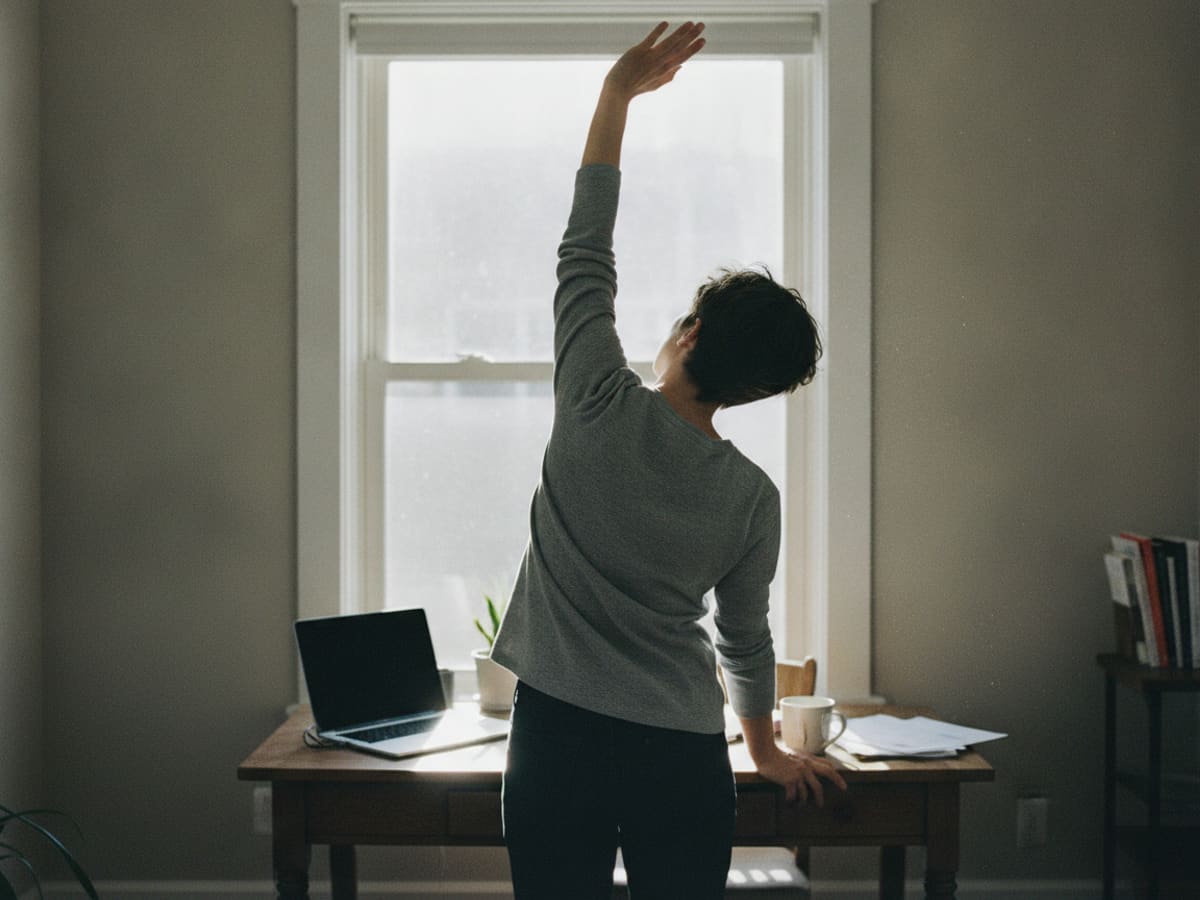
None of these needs to become a workout. The idea is simply to stand up, walk around, stretch, or take the long way when you can. Over a day, those little choices add up to more time on your feet.
Parking farther away and other small trades
A "small trade" is swapping an easy option for one that has a bit more movement in it, without making your day harder or longer in any meaningful way. You aren't adding a task. You're changing how you do one you were already doing.
Some trades people find manageable:
- Park a little farther from the entrance when you have the time and the weather is fine.
- Take the stairs for a floor or two instead of the elevator.
- Walk to a nearby errand instead of driving, if it's close and safe to do so.
- Get off public transit one stop early.
- Walk over to talk to a coworker or family member instead of sending a message.
You don't need to do all of these, or any of them every time. Some days you'll be tired, rushed, or carrying too much, and the closest parking spot is the right call. A trade works best when it feels optional and doable, not like a rule you have to follow.
It also helps to be realistic about your surroundings. If the route isn't well lit, the sidewalk is uneven, or the weather is rough, skipping the trade is a sensible choice.
Carrying, lifting and bending with care
Much of everyday movement involves handling things: groceries, laundry baskets, kids, pets, boxes, garden supplies. These tasks use your legs, back, arms, and core, so it's worth doing them in a way that's kind to your body.
A few general habits can help:
- Bring the load close to your body rather than holding it out in front of you.
- Bend at your hips and knees instead of rounding your back, when you can.
- Break a big load into two smaller trips if it feels awkward or heavy.
- Take your time getting up from a low position, especially if you've been sitting or crouching for a while.
- Wear shoes that give you steady footing on stairs and uneven ground.
Stairs deserve the same attention. Use the handrail if there is one, keep your hands free if you can, and don't rush when you're carrying something that blocks your view of your feet.
Checking in with yourself afterward
Once you've added a little more movement to your day, it helps to notice how you feel. Not in a graded, pass-or-fail way, just with simple curiosity.
You might ask yourself a few questions at the end of the day:
- Did I feel stiff, or a bit looser than usual?
- Was anything uncomfortable in a way that felt sharp or unusual?
- Did I have more or less energy than I expected?
- Which small change felt easiest to repeat tomorrow?
Mild tiredness after a busier day is common. Pain that feels sharp, lingers, or worries you is a different matter, and it's a good reason to ease off and check in with a health professional.
The most useful takeaway is that everyday movement counts, and you don't have to wait for a perfect workout day to take part in it. Choose one or two small changes that suit your schedule and your body, let them become familiar, and adjust as you go. That's a steady, practical way to keep moving through the life you already have.